I capture landscapes, travel, and street scenes with a focus on place, light, and the quiet moments that often go unnoticed. Select Limited Edition Fine Art prints produced with museum quality papers and ink are available in common sizes from 11 X 14 up to 40 X 80!
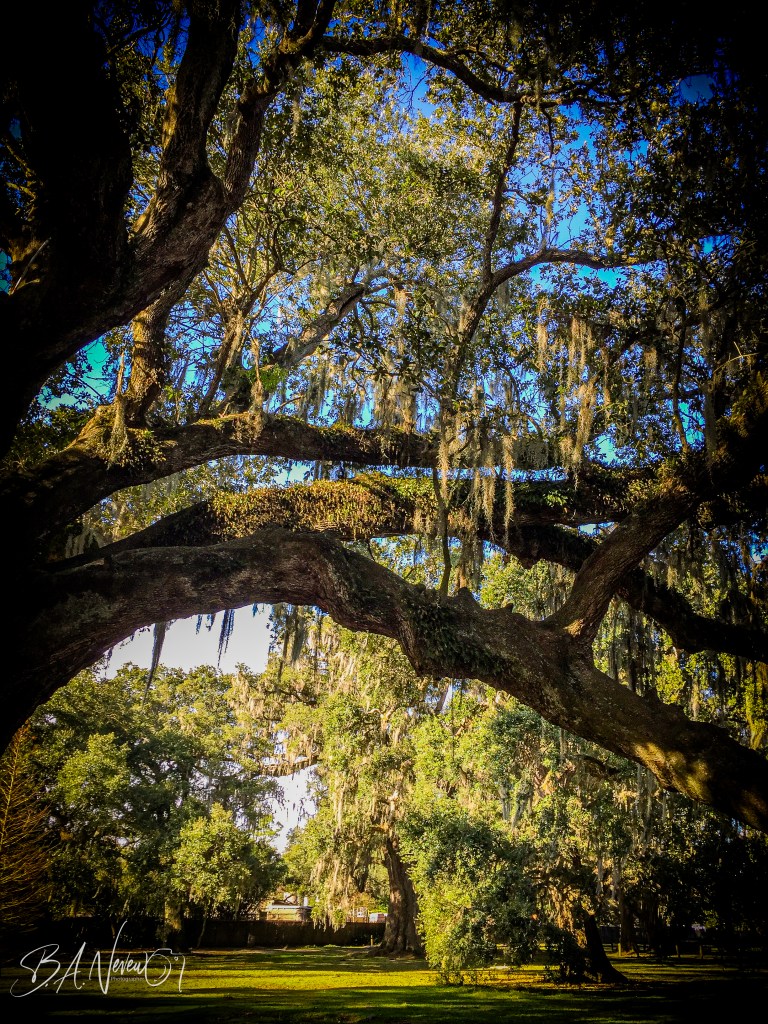
In New Orleans’ Audubon Park, the old live oaks measure time in centuries, not seasons.
Some have stood since before France built her outpost in the bayou and New Orleans became the city we know today. Their great limbs stretch across the sky while Spanish moss hangs like worn lace, drifting in the warm Gulf air.
Beneath their broad canopy, the noise of the city fades. People come and go, children play, dogs wander the grass, and afternoon light filters through the leaves.
The oaks remain, patient as ever, reminding us that while our lives pass quickly, some things are built to endure.
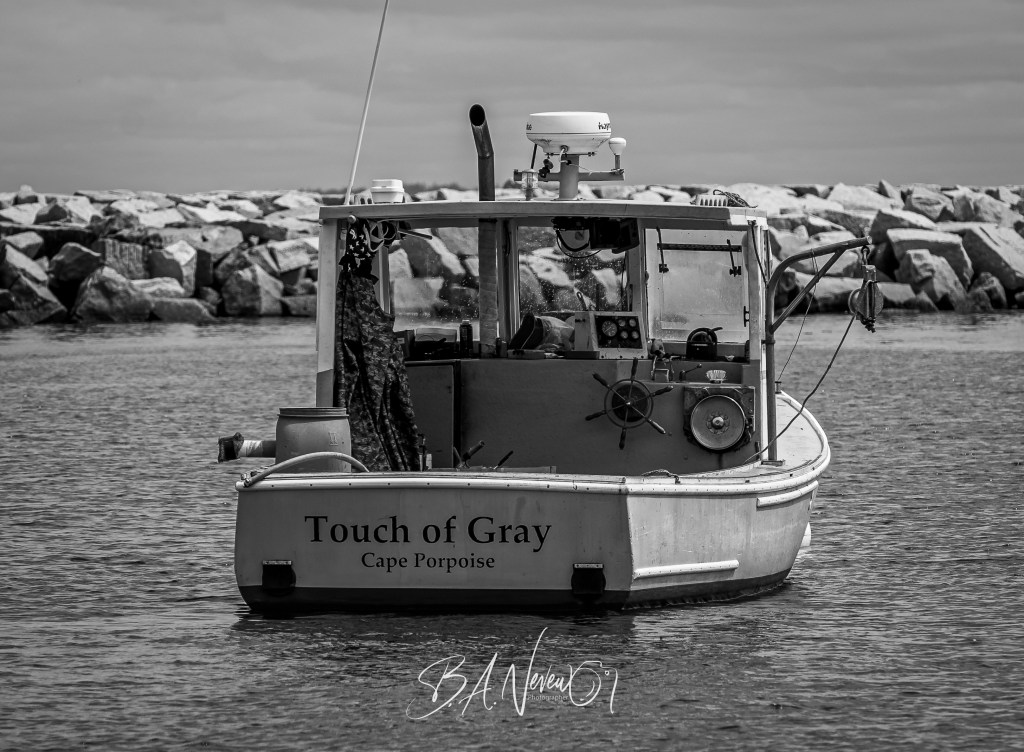
The aptly named lobster boat Touch of Gray—designated a F/V (Fishing Vessel) by the U.S. Coast Guard—motored up from her mooring in Cape Porpoise on a late July morning that felt more like early fall. Low clouds hung over Camp Ellis as an easterly wind swept across the water. She would soon slip past the granite blocks of the Camp Ellis jetty and into Saco Bay, where the captain’s day’s work waited among the lobster traps. This is coastal Maine, where the morning commute is often measured by tides and harbors rather than highways, carpools, or public transportation.
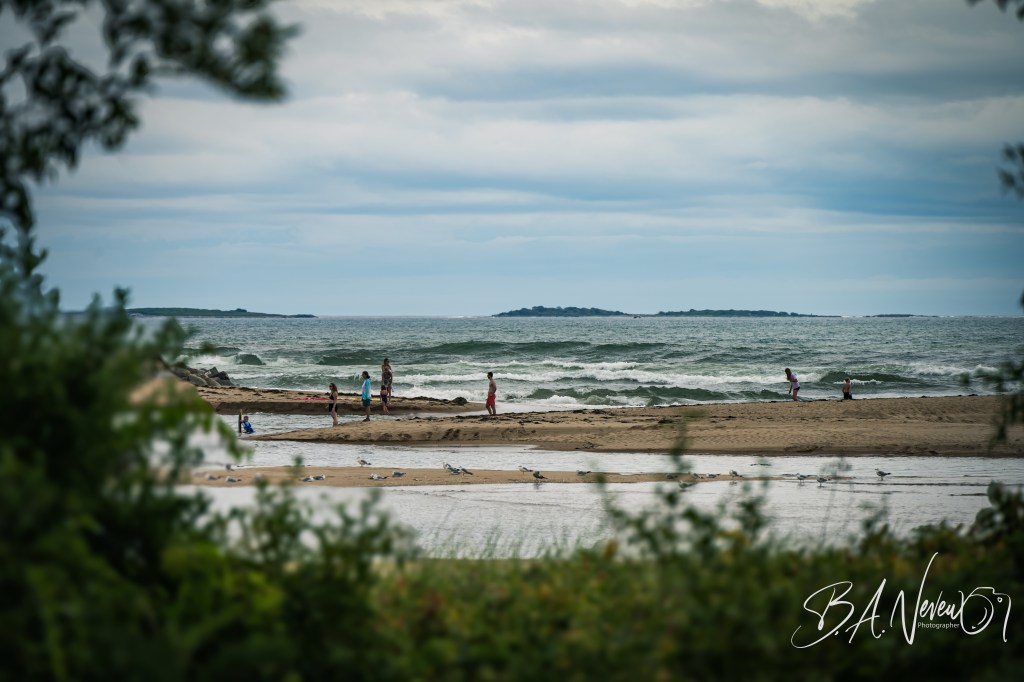
From the observation deck at the Rachel Carson Wildlife Refuge in Saco, Maine on the penultimate day of July, I watched a family in the surf below. The sky was gray, but they paid it no mind. They came for the ocean, not the weather.
Summer has reached its midpoint. August waits just beyond the horizon with warm tides, long afternoons, and the quiet reminder that the season is already slipping away. Each evening, the sun will leave a little sooner. The air will cool. Before long, the beaches will belong to the gulls again.
That is how summer should be remembered. Not by the color of the sky, but by the sound of children in the surf and the pull of the tide.
On the coast of Maine, even a cloudy day at the beach is better than most anywhere else.
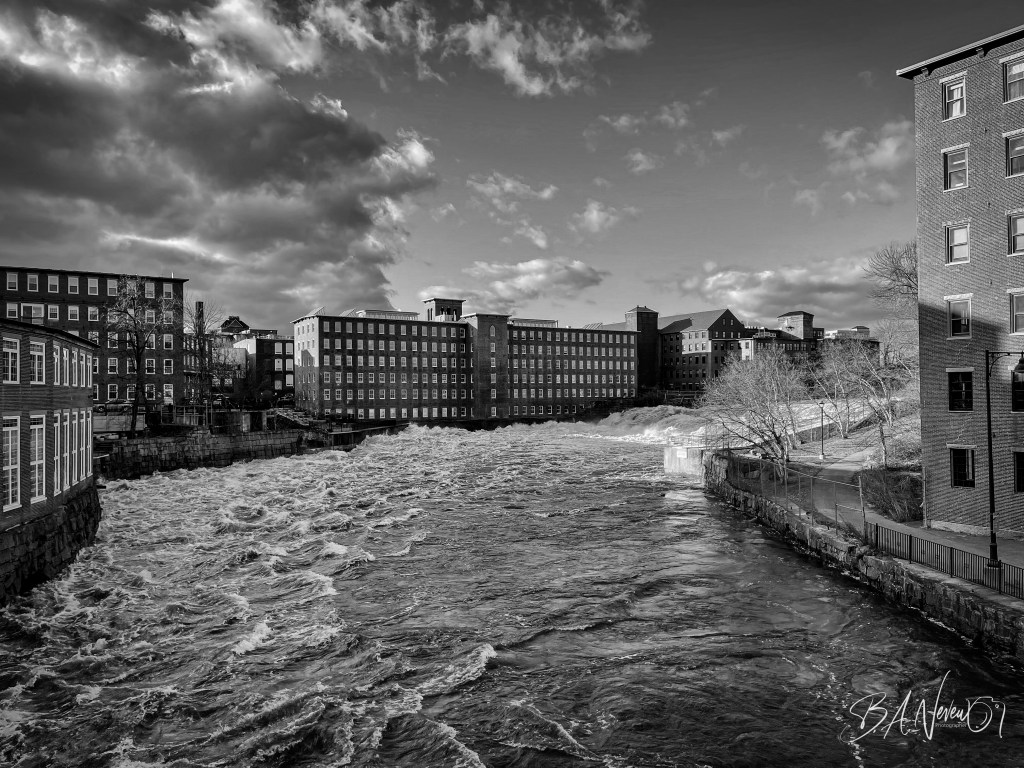
Long before coffee shops, galleries, and loft apartments overlooked these banks, its current turned thousands of wheels that powered one of New England’s great industrial engines. Wool became blankets. Leather became boots. Cotton became cloth. Shoes, machinery, and countless other goods left these brick mills by rail, carrying the labor of generations to markets around the world.
For more than a century, the rhythm of the water matched the rhythm of the machines. Shift whistles echoed through the twin cities. Immigrants found opportunity here. Families built lives around the mills, and entire neighborhoods rose with them.
Then, almost quietly, the machines fell silent.
Manufacturing moved away. Workers retired or were handed pink slips. Windows were boarded, roofs leaked, and the river flowed past empty buildings that seemed too massive to disappear and too worn to survive. For decades they stood as monuments to an era that had passed.
But the river kept moving.
Today, those same red-brick mills have found new purpose. The spinning frames, weaving looms and leather presses have given way to apartments and condominiums, artists’ studios, breweries, restaurants, shared workspaces, and small businesses. Where smokestacks once defined prosperity, creativity and entrepreneurship now fuel a new economy.
Like a phoenix rising from its own history, the mills remind us that communities, like rivers, endure by adapting. The water still rushes through the heart of both communities, no longer turning belts and gears, but carrying forward the same force that built this place more than 150 years ago: the power to reinvent itself.
Note: I captured this image from the pedestrian bridge after the powerful December rain storm in 2023. The roar of the river was deafening.
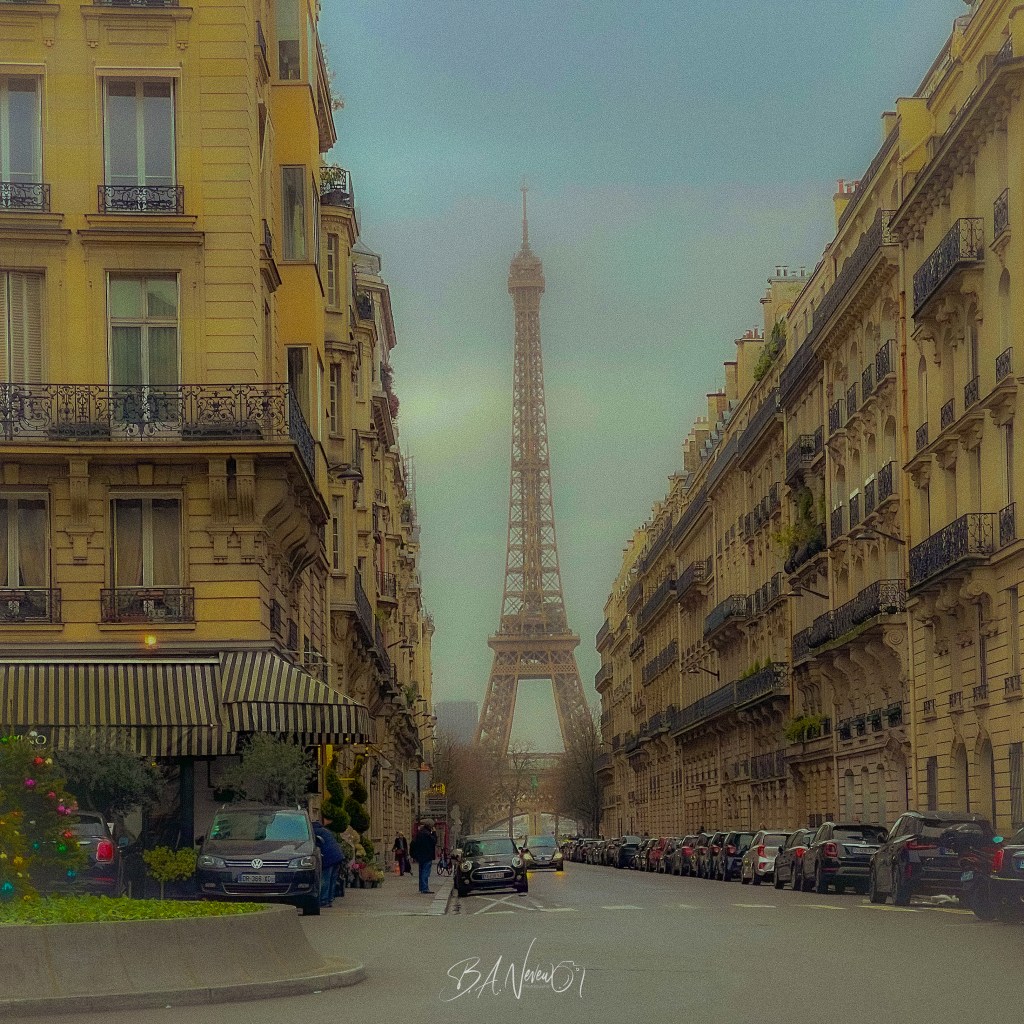
The tower stood in the mist as though it had always belonged to the gray sky. The street was quiet. The cafés had opened, but the day had not yet made up its mind.
A few people walked with purpose. A car passed. Someone carried flowers. Paris was never still, only slower in winter.
You could chase the city to its famous places, or you could wait in a side street like Place de Mexico, where the Eiffel Tower appeared between the old apartment houses without asking for attention. It was enough to stand there a while and let the morning come to you.
That was Paris too. Not the one in postcards, but the one you remembered long after you had gone home.
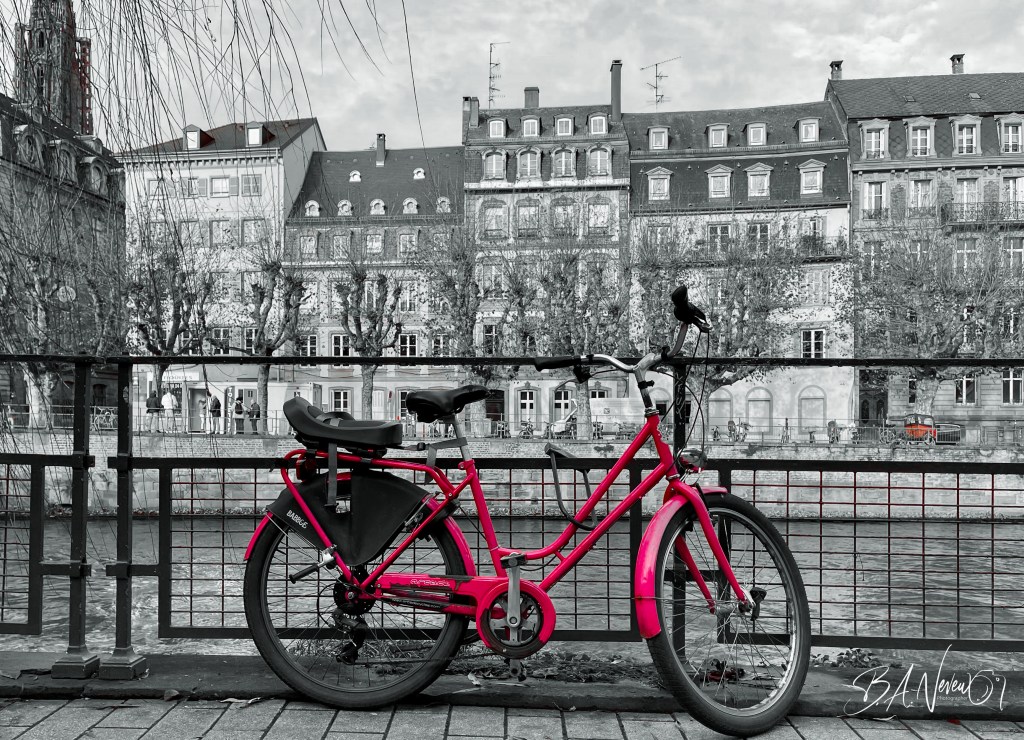
Winter in Strasbourg is often remembered for the glow of its Christmas markets. Step a few streets away, and the city offers something quieter.
Along Quai des Bateliers, a solitary bicycle waits beside the Ill, its bright pink frame bringing life to the muted colors of winter. Bare plane trees line the river, centuries-old façades stand watch across the water, and the cathedral’s spire rises just beyond the rooftops. There are no crowds here, no holiday stalls—only the calm rhythm of a city returning to itself.
Sometimes the most memorable travel photographs are found not in the celebration, but in the silence between them. This was one of those moments.
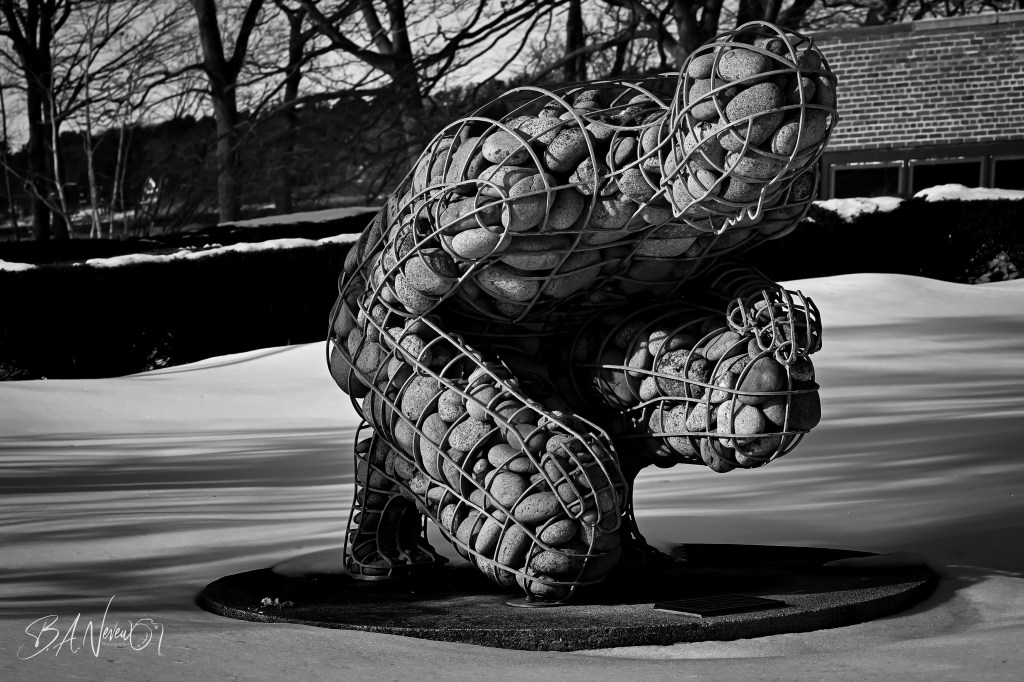
At first glance it is a person, bent beneath an unseen weight. Look longer and it becomes the landscape itself—thousands of Maine stones, rounded and soften by the North Atlantic, gathered into a human form. Created by Biddeford native Celeste Roberge, Rising Cairn reminds us that we carry the places we come from, one stone at a time.
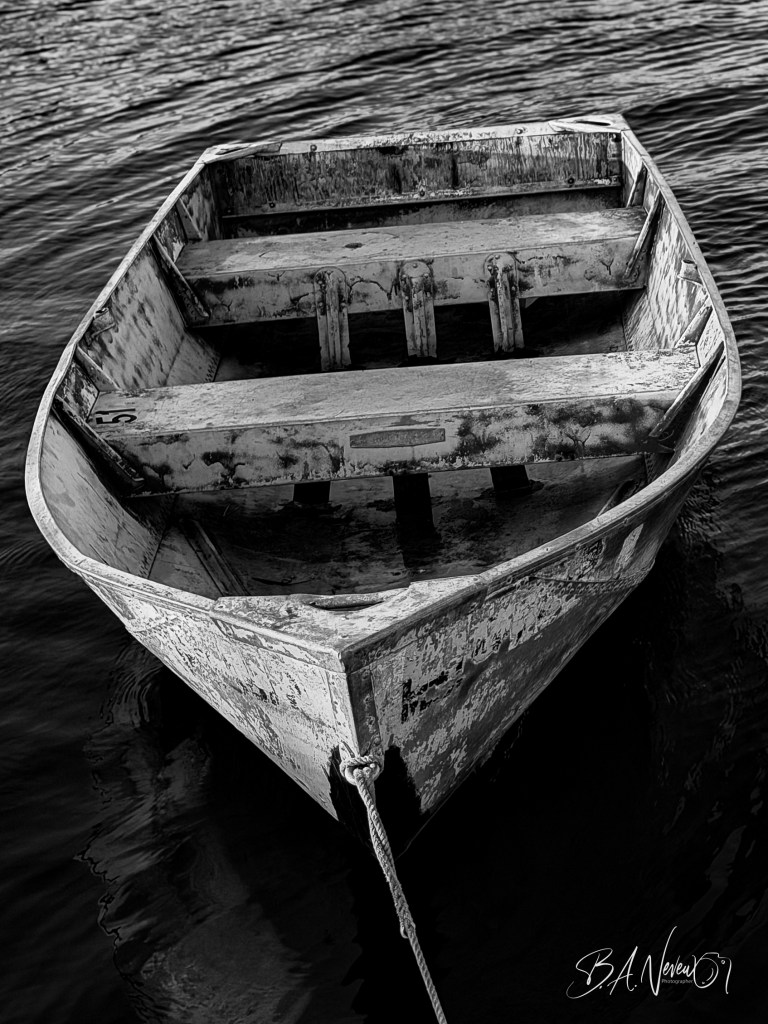
The skiff waited below the pier as the last light settled over Cape Porpoise. Beyond the harbor, lobster boats rested at their moorings, ready for another tide. The village had grown quiet. The bait sheds were closed. The gulls had little left to argue about.
The boat wore its scars without complaint. Salt, sun, and hard seasons had stripped away the paint but not its purpose.
Tomorrow, before dawn, it would leave the harbor again. In the fishing village of Cape Porpoise, that is how summer has always begun.
*Numbered Limited Edition Fine Art prints of this photograph are available for your collection.
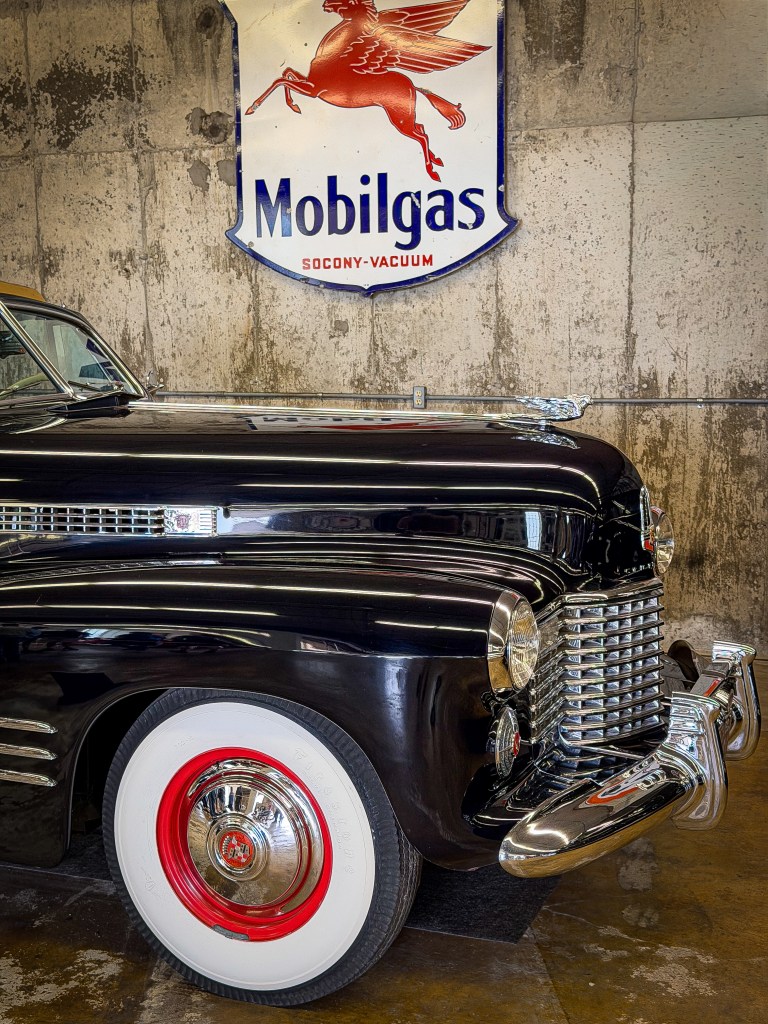
It was a good car. Heavy in the fenders and clean in the back, the way a fastback coupe ought to be. When you sat in the driver’s seat, you knew exactly what you had. The clutch was firm, and the 346-cubic-inch L-head V-8 didn’t shout; it just worked.
It idled with the steady, quiet breathing of a seasoned horse in the morning. Fortunately the red pegasus signs were a highway staple in ’42.
By the Summer, America was on the brink of change, and the shiny bits—the chrome, the brightwork—were going away. But the metal beneath remained honest. It handled the winding mountain roads with a quiet, dependable grace, holding the curve and taking the bumps without any fuss.
It was a true machine, built to travel the long road when the weather was clear and a man had somewhere to go.
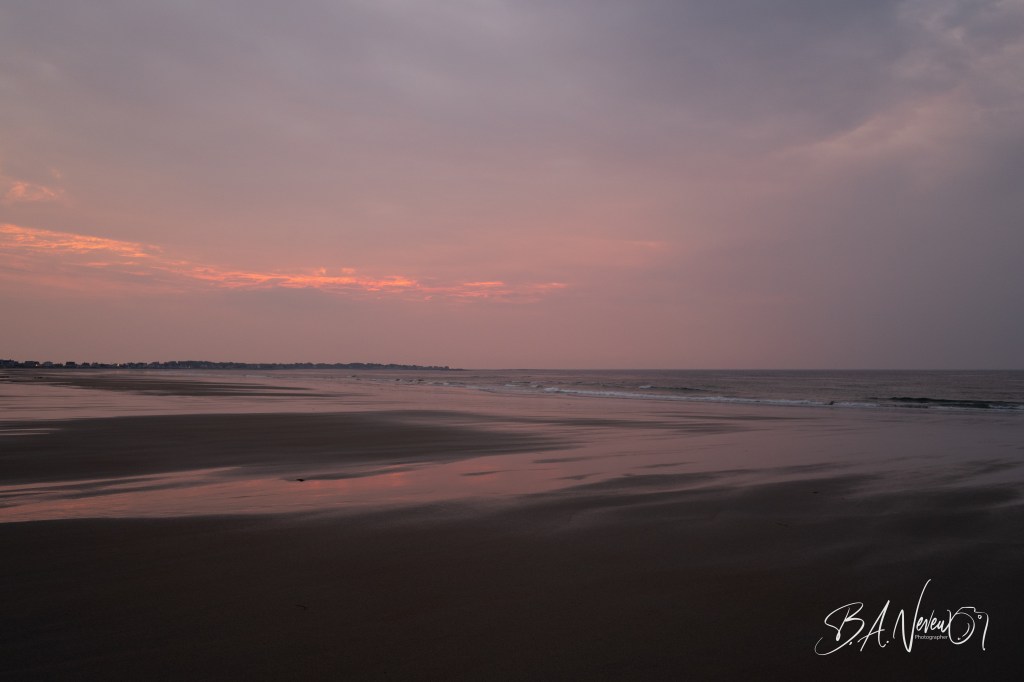
This morning the sky over Fortunes Rocks in Biddeford, Maine wore the color of distant fires. Smoke from another country painted Maine in soft shades of pink. It should have felt unsettling. Instead, it brought a quiet the beach has always understood.
The tide was out. The sand held the light. The ocean kept its own counsel.
After the weight this city carried on Monday of this week, there was comfort in knowing the sun still found its way through the haze. Sometimes peace arrives from unexpected places. Sometimes it is enough to stand still, breathe the salt air, and remember that even wounded sky’s can give us something beautiful.