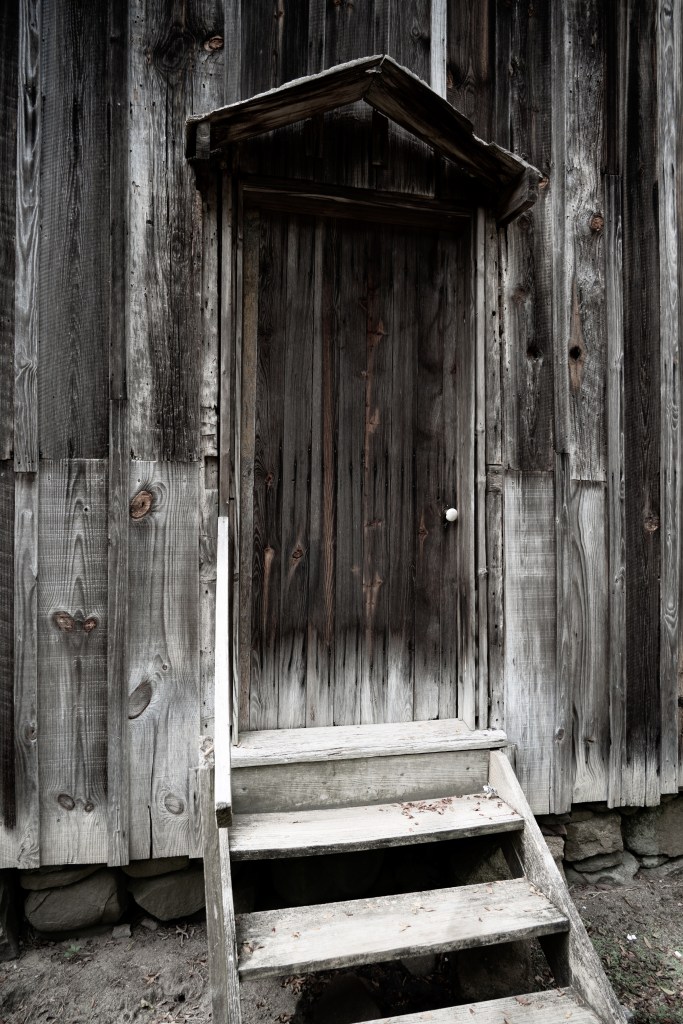
The door has no window. Only a white porcelain knob and a threshold worn by the feet of those who passed through it.
At Stagville, North Carolina, this was the entrance to the quarters where enslaved people lived. Tobacco hands. Men and women whose labor helped build a plantation fortune. Children born into a life they did not choose.
We do not know how many hands turned that knob or how many feet wore down the boards. The records tell some of the story. The rest belongs to the people who lived it.
The wood has weathered. The grain has faded. The stones beneath the house remain. Time wears things down, but it does not make them right. And it does not erase what happened.
Slavery ended. Freedom came, but freedom and equality were never the same thing. For generations afterward, many Black families remained tied to the land through sharecropping, debt, and hard labor. The law changed. The struggle to get ahead did not end with it.
Today, this part of North Carolina is changing again.
The fields and old plantation lands exist in the shadow of a different economy. Merck, Novo Nordisk, Eli Lilly, and Biogen are part of a pharmaceutical and biotechnology industry bringing investment, jobs, and scientific discovery to the region. Google represents another face of the modern economy. Fungi Film belongs to a different kind of enterprise, one built around the stories we choose to tell.
These are different times and different worlds. The people working in laboratories, offices, and production studios are not the people who once worked these fields. Yet the contrast is hard to ignore. Where wealth once grew from tobacco and enslaved labor, new wealth grows from science, technology, and human invention.
The landscape changes. Roads widen. New buildings rise. People arrive looking for work and a better life.
But history has a long memory here.
Family roots run deep, sometimes deeper than the red Carolina clay. The consequences of who owned the land, who worked it, and who inherited its rewards did not disappear when the war ended. The past does not explain everything about the present. But neither can we understand the present by pretending the past never happened.
I stood before this door and thought about the people who once called these quarters home. Their lives were more than the suffering imposed on them. They had families to raise, children to protect, work to endure, and hopes of their own. They were not merely part of a plantation’s history. They were people living their lives under conditions they had not chosen.
The door stands now as a witness.
North Carolina moves forward. New industries arrive. New fortunes are made. Generations build lives far removed from the world that existed here.
And still, this door remains.
We cannot change what happened behind it. We can choose whether to look at it honestly.
Sometimes history is not found in a grand house or a monument. Sometimes it is here, in weathered boards, a worn threshold, and a white porcelain knob that has outlasted the people who turned it.
The wood remembers nothing.
We must.

