I capture landscapes, travel, and street scenes with a focus on place, light, and the quiet moments that often go unnoticed. Select Limited Edition Fine Art prints produced with museum quality papers and ink are available in common sizes from 11 X 14 up to 40 X 80!
The cold was sharp, thirty degrees but feeling like twenty-five. The coldest morning yet.
Burt and I walked out early, his breath puffing white in the frozen air.
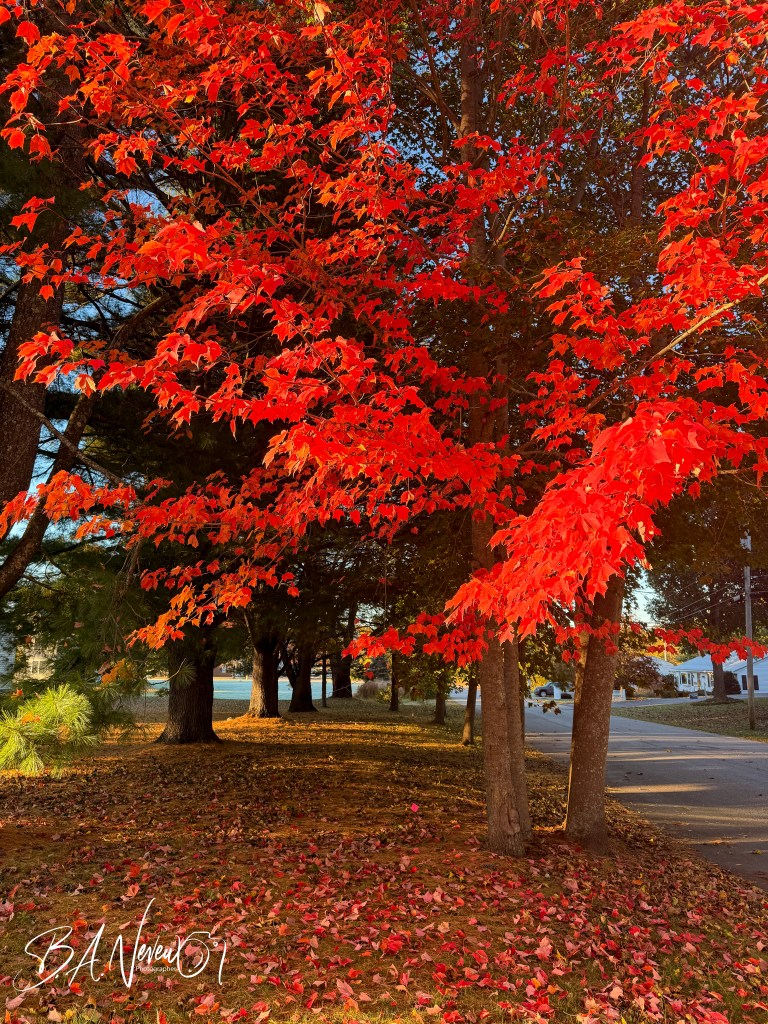
The low sun came flat through the timber, hitting the maples until they burned a hard, clean red against the dark pines. The leaves were stiff with frost and crunched under my shoes.
A good, October morning in Maine. The sense of what’s to come. Just the dog, the golden light, and the cold staying in your lungs for a bit.
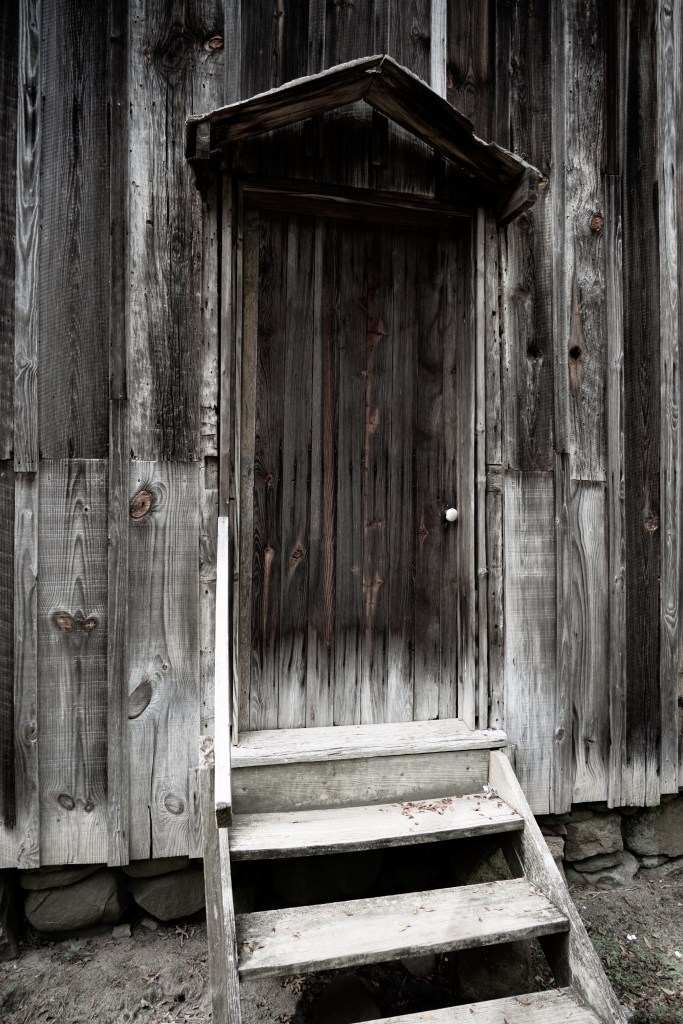
The door has no window. Only a white porcelain knob and a threshold worn by the feet of those who passed through it.
At Stagville, North Carolina, this was the entrance to the quarters where enslaved people lived. Tobacco hands. Men and women whose labor helped build a plantation fortune. Children born into a life they did not choose.
We do not know how many hands turned that knob or how many feet wore down the boards. The records tell some of the story. The rest belongs to the people who lived it.
The wood has weathered. The grain has faded. The stones beneath the house remain. Time wears things down, but it does not make them right. And it does not erase what happened.
Slavery ended. Freedom came, but freedom and equality were never the same thing. For generations afterward, many Black families remained tied to the land through sharecropping, debt, and hard labor. The law changed. The struggle to get ahead did not end with it.
Today, this part of North Carolina is changing again.
The fields and old plantation lands exist in the shadow of a different economy. Merck, Novo Nordisk, Eli Lilly, and Biogen are part of a pharmaceutical and biotechnology industry bringing investment, jobs, and scientific discovery to the region. Google represents another face of the modern economy. Fungi Film belongs to a different kind of enterprise, one built around the stories we choose to tell.
These are different times and different worlds. The people working in laboratories, offices, and production studios are not the people who once worked these fields. Yet the contrast is hard to ignore. Where wealth once grew from tobacco and enslaved labor, new wealth grows from science, technology, and human invention.
The landscape changes. Roads widen. New buildings rise. People arrive looking for work and a better life.
But history has a long memory here.
Family roots run deep, sometimes deeper than the red Carolina clay. The consequences of who owned the land, who worked it, and who inherited its rewards did not disappear when the war ended. The past does not explain everything about the present. But neither can we understand the present by pretending the past never happened.
I stood before this door and thought about the people who once called these quarters home. Their lives were more than the suffering imposed on them. They had families to raise, children to protect, work to endure, and hopes of their own. They were not merely part of a plantation’s history. They were people living their lives under conditions they had not chosen.
The door stands now as a witness.
North Carolina moves forward. New industries arrive. New fortunes are made. Generations build lives far removed from the world that existed here.
And still, this door remains.
We cannot change what happened behind it. We can choose whether to look at it honestly.
Sometimes history is not found in a grand house or a monument. Sometimes it is here, in weathered boards, a worn threshold, and a white porcelain knob that has outlasted the people who turned it.
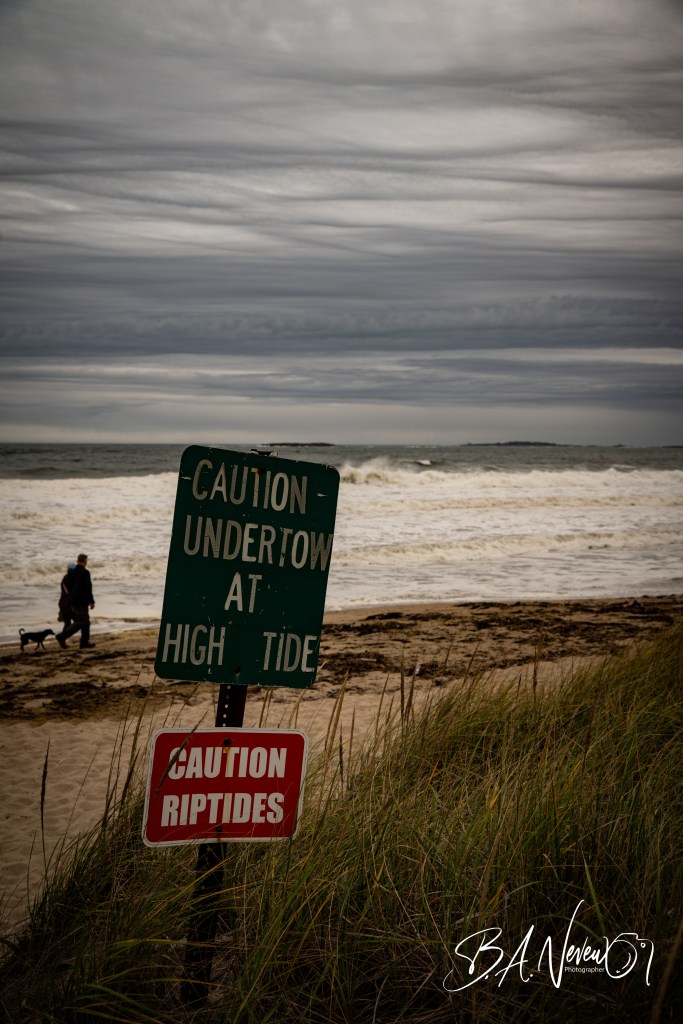
The surf was churning on Saco Bay today, on the second day of the unnamed storm of September 2026. We don’t name our Nor’easters up here. We just watch them come.
This one has been working its way up the Atlantic from the Carolinas, stirring the water all the way to Maine. It has lingered off the Jersey Shore and, judging by the waves, has no particular hurry to leave.
I think it looks a little like Sandy. It has done enough damage that you might think it deserved a name.The weather people say there is more rain coming. More wind. More surf.So a late-September swim at Kinney Shores can wait. The beach will still be here.
For now, the dune grass bends in the wind, the signs say what they need to say, and the Atlantic keeps coming ashore. And somewhere out there, the 2026 hurricane season is still waiting for its first hurricane. Storm damage doesn’t need a name.
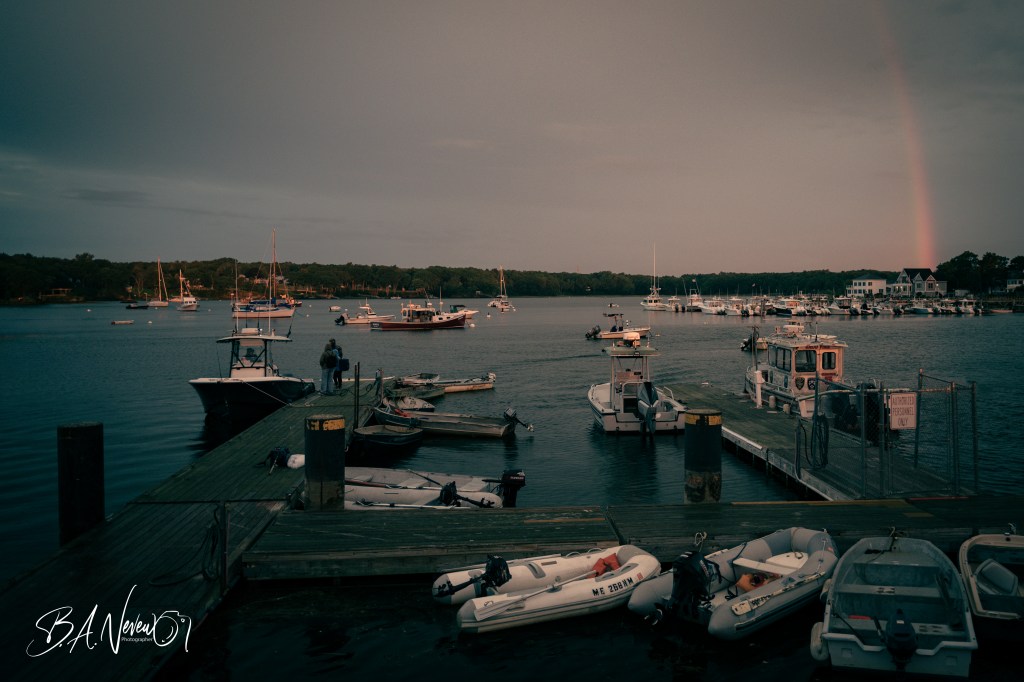
At Camp Ellis, the marina was still waking. Two fishermen stood on the dock beside their boat, ready to head out while the harbor was quiet. The sky was dark with rain, but the morning had found a way through.
A faint rainbow appeared beyond the boats, almost lost in the weather.
The sun was rising somewhere behind the clouds and behind us, putting just enough light on the water to separate the day from the night.
They would go fishing. The rain would come when it came.
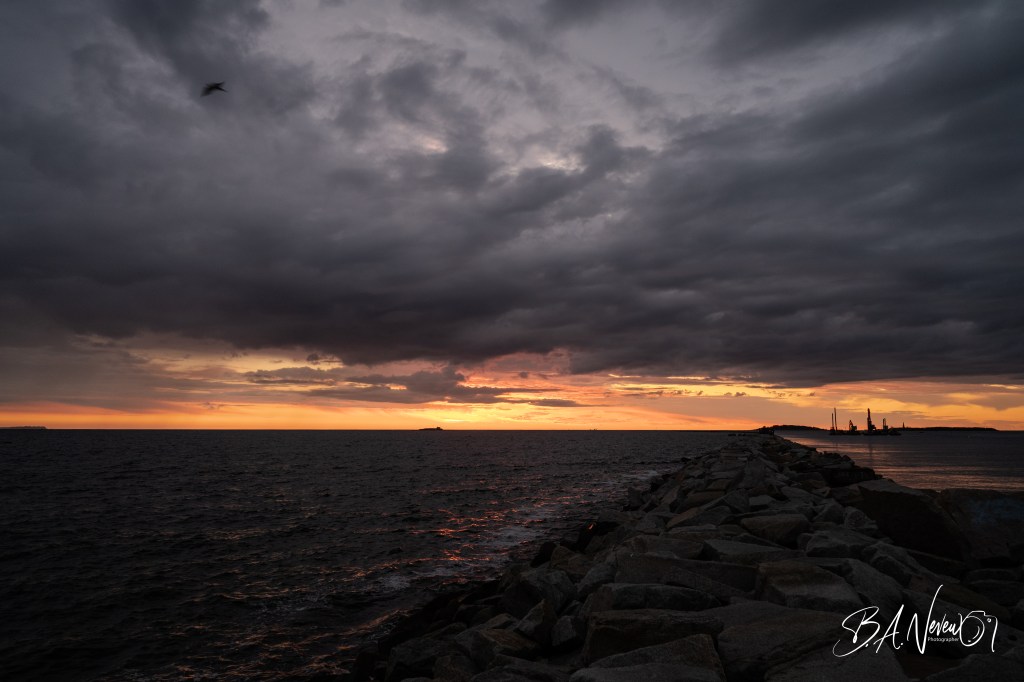
Photographs speak for themselves. This one does. I took it at dawn on the Camp Ellis jetty in Saco, Maine. It was September 6, 2026. The best light always comes before the dawn. And in Maine, in September, close to the equinox.
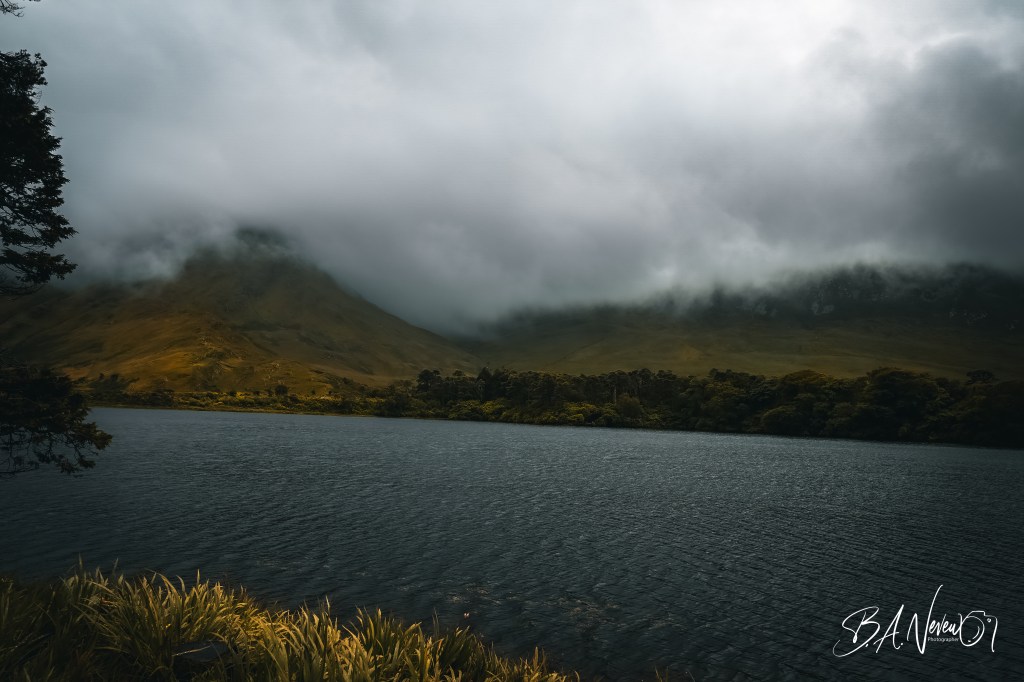
From the banks of a lough in Connemara, near Kylemore Abbey.
The light was gray and soft. Clouds had settled low over the Connemara mountains, hiding their peaks and turning the landscape into layers of green and mist.
The lake was dark beneath them. A cool wind moved across the water, making small waves that carried the gray sky toward the shore.
There was no bright sunshine. No clear view of the mountains. Just the quiet beauty of the Irish landscape—water, mountains, trees, clouds and rain.
This is Ireland.
The Wild Atlantic Way does not always give you blue skies and perfect views. Sometimes the Irish mist is the view. Sometimes the clouds make the mountains more mysterious and the landscape more beautiful.
Standing there with a camera, I realized that Ireland travel photography is not always about capturing what you came to see.
Sometimes it is about capturing what Ireland gives you.
And on this summer morning at Pollacappul Lough, Ireland gave us mist.
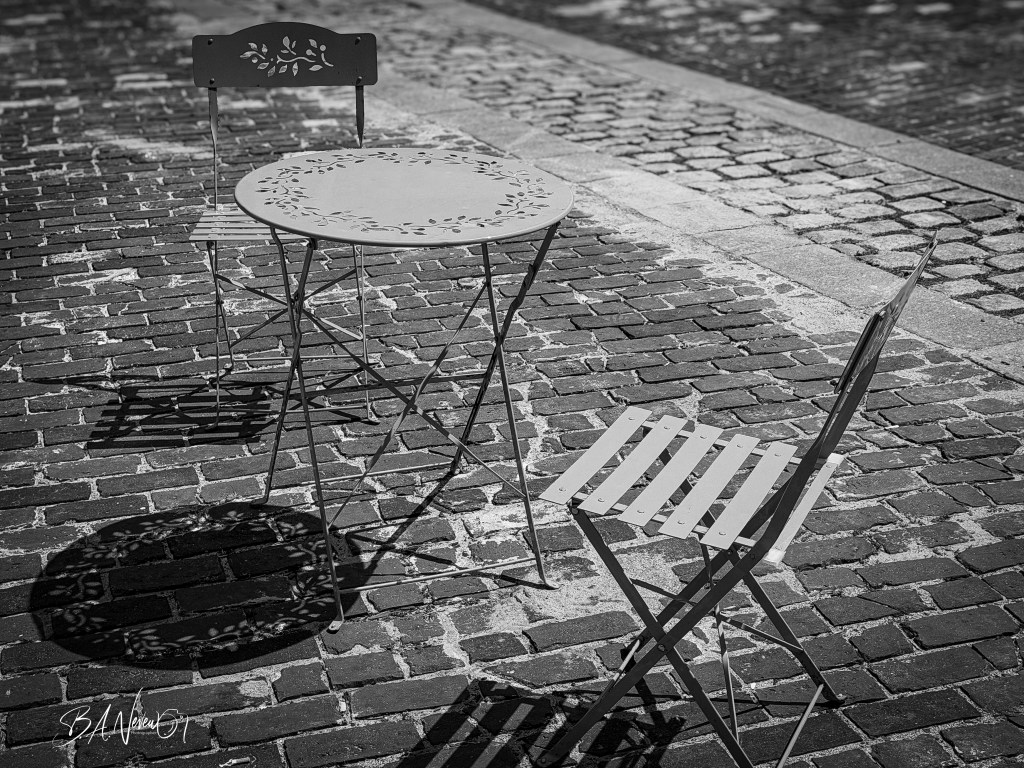
It was one of those August days when the heat settles into the brick and stays there. The chairs stood empty around the little table. Their shadows stretched across the pavement, sharp beneath the midday sun.
No one was in a hurry. It was the dog days of August.
The kind of day when you find a shady place, sit down, and let the world pass slowly by.
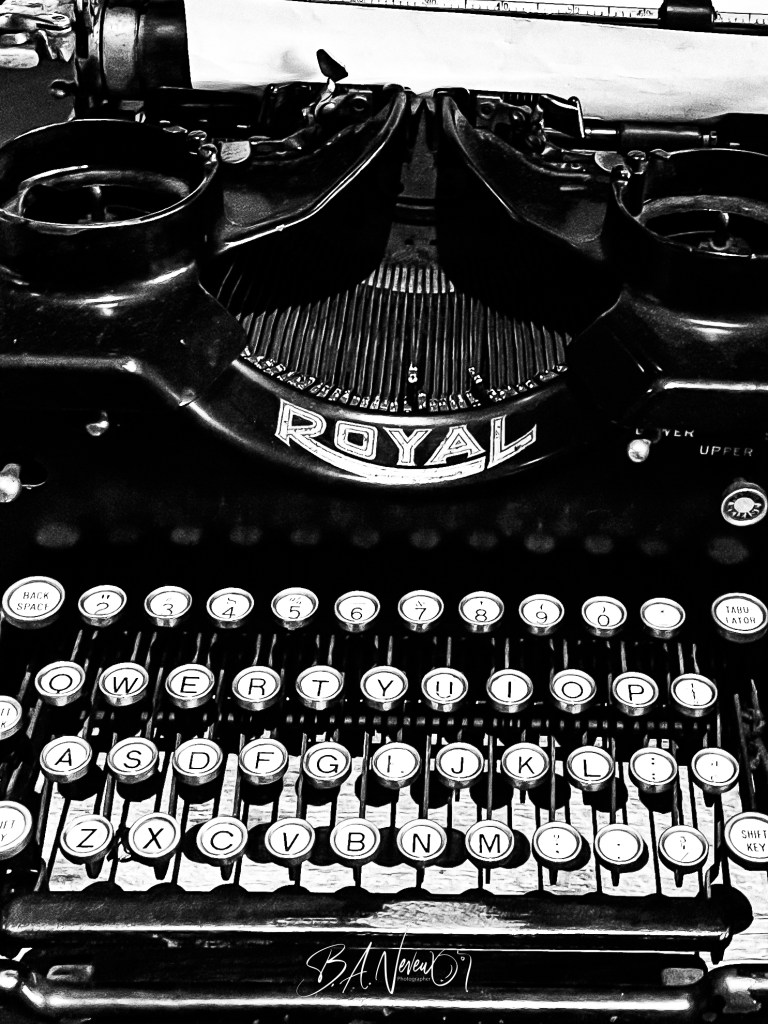
There was a time when writing required more than a keyboard and a screen. It required a Royal.
I created this photoblog because I enjoy taking photographs and writing short stories and vignettes about the images I capture. For me, the two have always gone hand in hand. A photograph captures a moment. A few words can give that moment a little more life.
This old Royal caught my eye.
The black paint is worn. The keys have yellowed with age. The metal carries the marks of years of use. Yet it still has a certain dignity.
There was no delete button. No spell check. No easy way to fix a mistake.
You had to choose your words carefully.
I like that.
Perhaps that is what I like about the old typewriter. It reminds me that writing, like photography, is about slowing down and paying attention.
One letter. One frame. One moment at a time.
If you’re interested in acquiring any of the photographs shared on this site, or would like a custom piece, please contact me.