B.A.Neveux Photography

I capture landscapes, travel, and street scenes with a focus on place, light, and the quiet moments that often go unnoticed. Select Limited Edition Fine Art prints produced with museum quality papers and ink are available in common sizes from 11 X 14 up to 40 X 80!

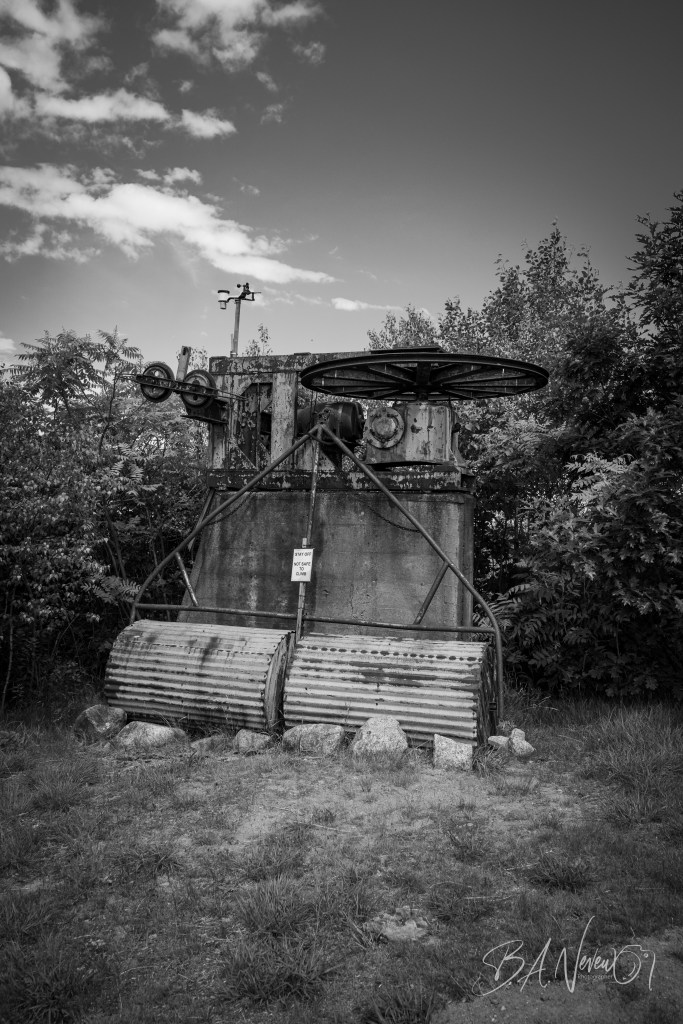
  • The iron rusts where the snow once lay deep. A T-bar, the summit wheel of the old chairlift, and a few heavy grooming rollers are all that remain of Big A. The mountain is still there. It simply has different stories to tell now.

    For me, one of those stories began in 1972 or so, when I first strapped on a pair of borrowed skis at Big A on Mount Agamenticus. Like so many southern Maine kids, it was where winter became adventure.

    Big A opened in 1964 with ambitions that reached beyond its modest summit. Complete with a chairlift, T-bars, snowmaking, night skiing, and a bustling lodge, it became the place where generations learned to ski. But the challenges of coastal Maine winters and rising operating costs proved too much, and after the 1974–75 season, the lifts stopped turning. The mountain would eventually become the treasured conservation area it is today.

    Whenever I come across these rusting pieces of steel, I don’t just see the remains of a ski area. I see a cold Sunday afternoons with my friends Ben and Ray, riding the T-bar to the top, laughing more than skiing, and learning lessons that had little to do with carving turns. Those afternoons seemed ordinary at the time. Looking back, they were anything but.

    Sometimes history doesn’t disappear. It simply rusts in the woods, waiting for someone who remembers.
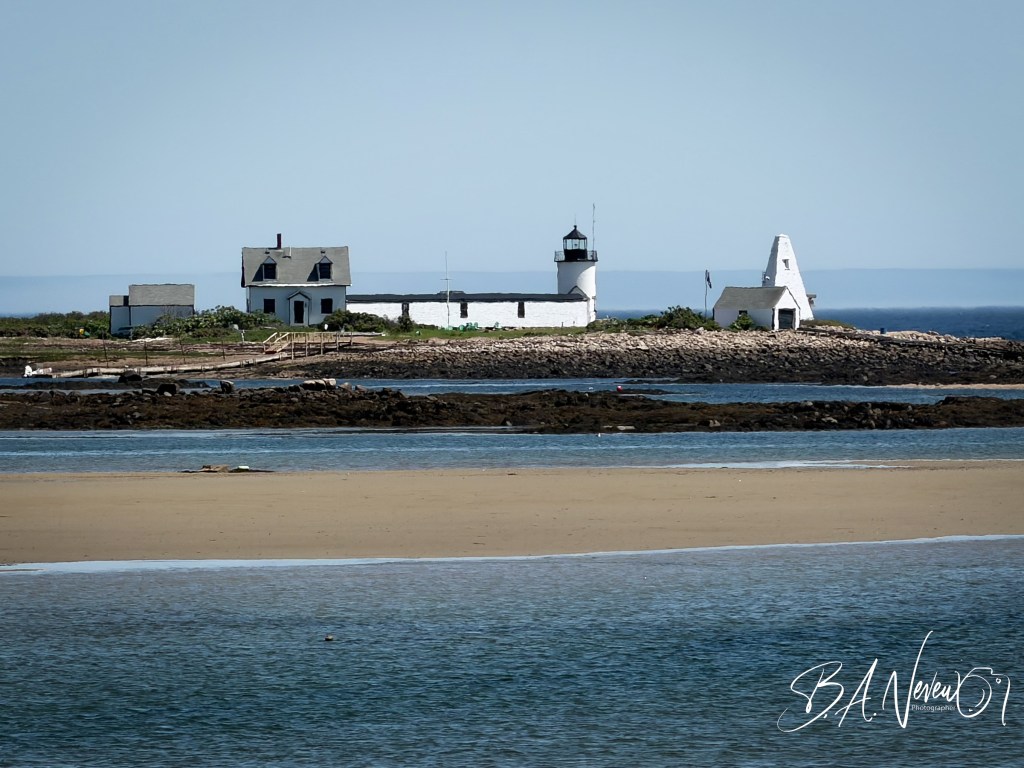
  • Leaving the Chowder House after lunch with an old friend, Goat Island appeared, low and white against the blue water. The lighthouse stood as it always had, plain and useful. There was nothing grand about it. It did its work.

    The channel wound through the sand flats like a river that had forgotten where it belonged. The mud showed dark along the edges. Gulls picked at it and called to one another. Their voices carried across the harbor in the clean June air.

    The fishing boats waited for the tide. Some leaned a little. Others rested flat on the bottom. They looked patient. Fishermen learn patience whether they want to or not.

    We had known each other a long time. Long enough that silence was easy. We watched the harbor without needing to explain it.

    Across the water the island keeper’s house and the light caught the sun. The white walls were bright against the sea. Beyond them was open ocean and the horizon, hard and straight.

    The harbor smelled of salt, bait, diesel fuel and seaweed drying in the sun. It was the smell of work. Men would be out again when the tide returned. Lobster traps would be hauled. Lines would be tended. The day would continue as it always had.

    We stood there a while longer and watched the water move slowly back toward the sea. It was a good day. The kind of day that asks nothing from a man except that he be there to see it.

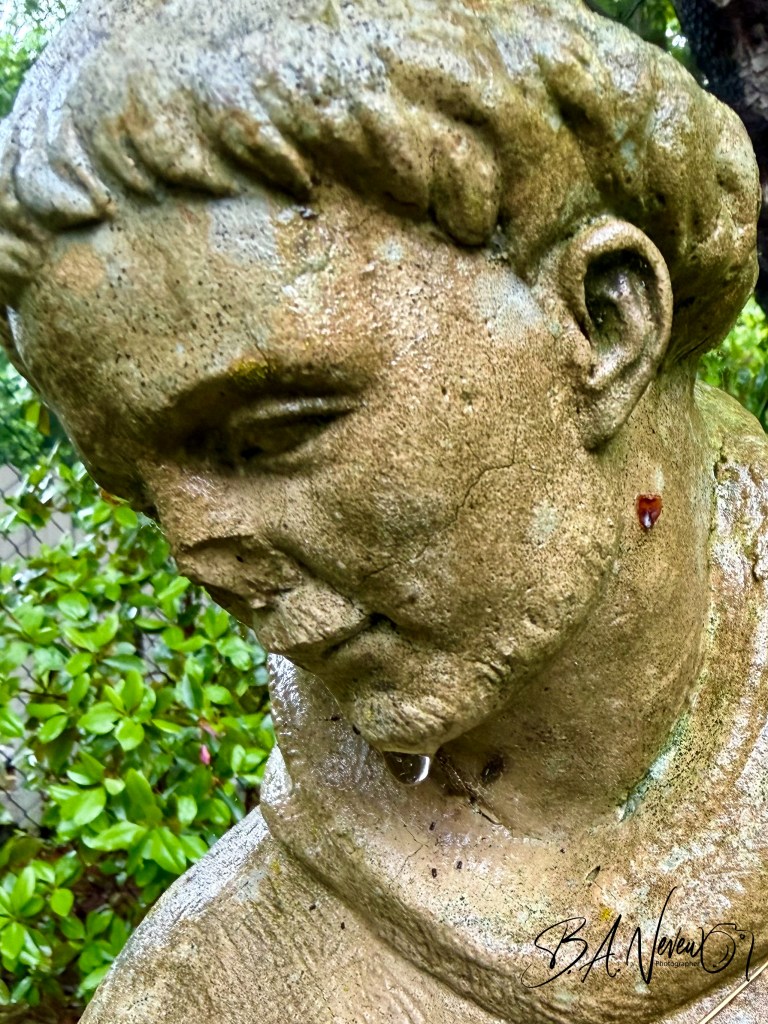
  • The rain settles into the stone and darkens it. Water gathers beneath the statue’s chin and falls slowly into the garden below.

    The face of old St. Francis is worn smooth in places, eaten rough in others by years of Maine weather and harder winters.

    Moss holds to the cracks like natures glue. The leaves of the rhododendron behind it stay green and alive while the statue endures the changing of another season.

    It bows its head as though listen to something long gone. No one had carved sorrow into the face, but time as placed it there anyway.

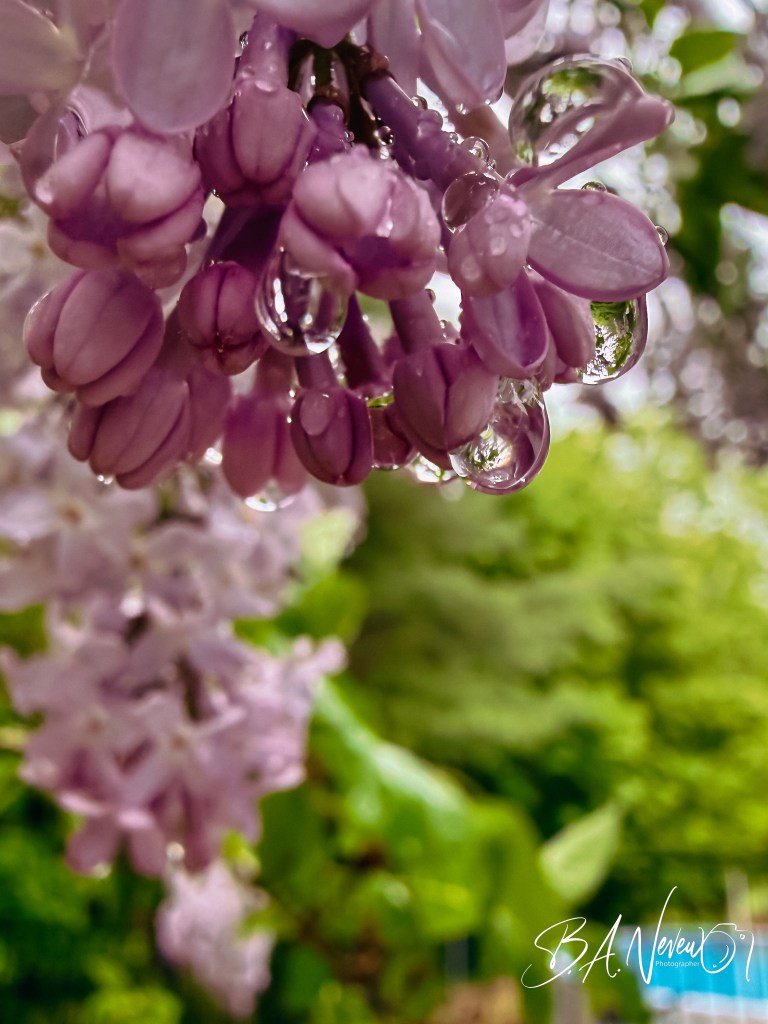
  • Rain clings to lilacs.

    Spring held inside crystal drops.

    The world waits in green.

  • They stayed longer than planned, casting into the darkening water while the last rays of a spring sunset faded over the Scarborough marsh. The river moved quiet and steady, carrying the tide beneath a pale sky streaked with the final light of day. The men stood apart with their rods and their thoughts, listening to the wind in the reeds and the soft pull of the current against the shore.

    There was no hurry to leave. Night would come soon enough. For a little while longer the world was still, and the river belonged only to the fishermen, the marsh, and the fading light.

    A very limited edition Fine Art print of this photograph is available.

  • A woman casually walked past my lens as morning settled softly along West 53rd Street, here glass and light began their daily conversation. The storefront—the Museum of Modern Art store—held its quiet interior like a secret, shelves of books glowing in warm, deliberate light attracting museum guests and passersby alike. Outside, the city stirred. A passing truck slipped across the window as a pale ghost, while pedestrians drifted through the frame, half-formed in reflection.

    Spring leaves stretched overhead, their green cutting through the steel geometry of New York, softening the hard edges without ever taming them. The word Museum floats on the glass, suspended between inside and out, as if unsure which world it belongs to.

    Here, on this narrow stretch of sidewalk, the city seemed to fold in on itself—motion layered over stillness, commerce over contemplation. I could not simply walk past. I paused, only for a second, and saw two mornings at once.

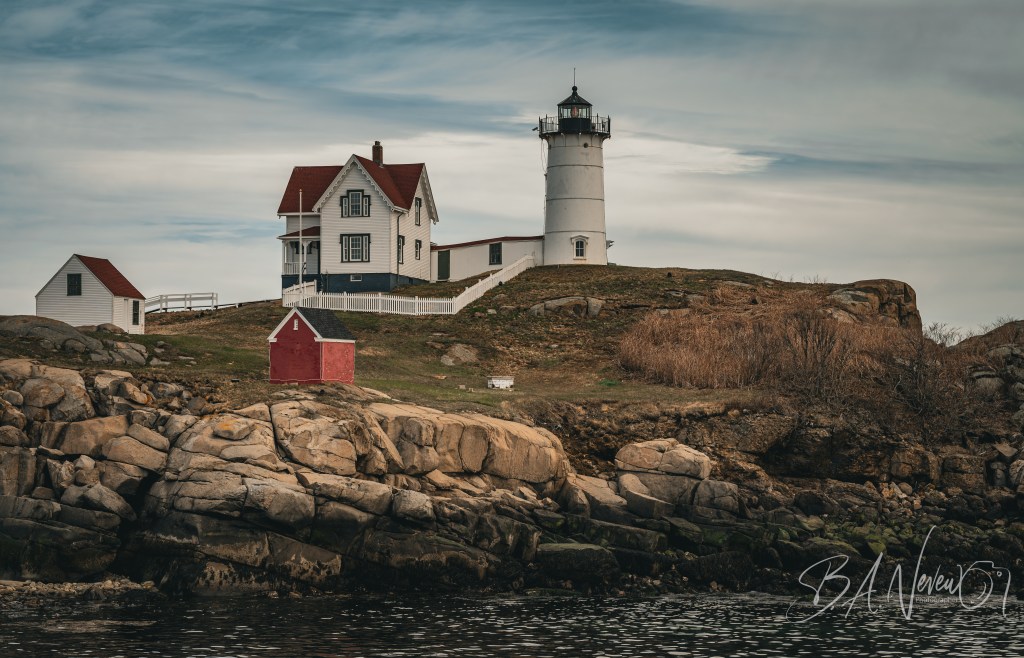
  • The light first burned on the rocky edge of Cape Neddick, set there to guide ships past a coast that had little patience for mistakes, nearly 150 years ago. What stands now as Cape Neddick Light—Nubble Light to those who know it—was never meant to be admired. It was meant to be trusted.

    They built it on a small island just offshore, where the granite takes the full weight of the Atlantic. The tower is not tall by measure, but it does not need to be. It rises enough. The beam carries far enough. That has always been the point.

    The keeper’s house sits close, practical and enduring, its red roof a quiet contrast to the pale tower. There was a time when men lived here year-round, tending the light through fog, ice, and long winter nights. They trimmed wicks, cleaned lenses, and watched the horizon because someone had to.

    Now the light turns on its own, maintained by the United States Coast Guard, but the feeling of the place has not changed. It still looks like a post that should not be left unattended.

    The sea works the rock below in its own time. Some days it strikes hard, other days it only breathes against the shore. Either way, the Nubble holds.

    In December, they hang lights across the buildings. People gather on the mainland to watch. It softens the place for a while. Makes it feel closer than it is.

    But most days, it stands apart—steady, quiet, and certain of its purpose.

    A Fine art quality print of this iconic Maine lighthouse would be a great keepsake.

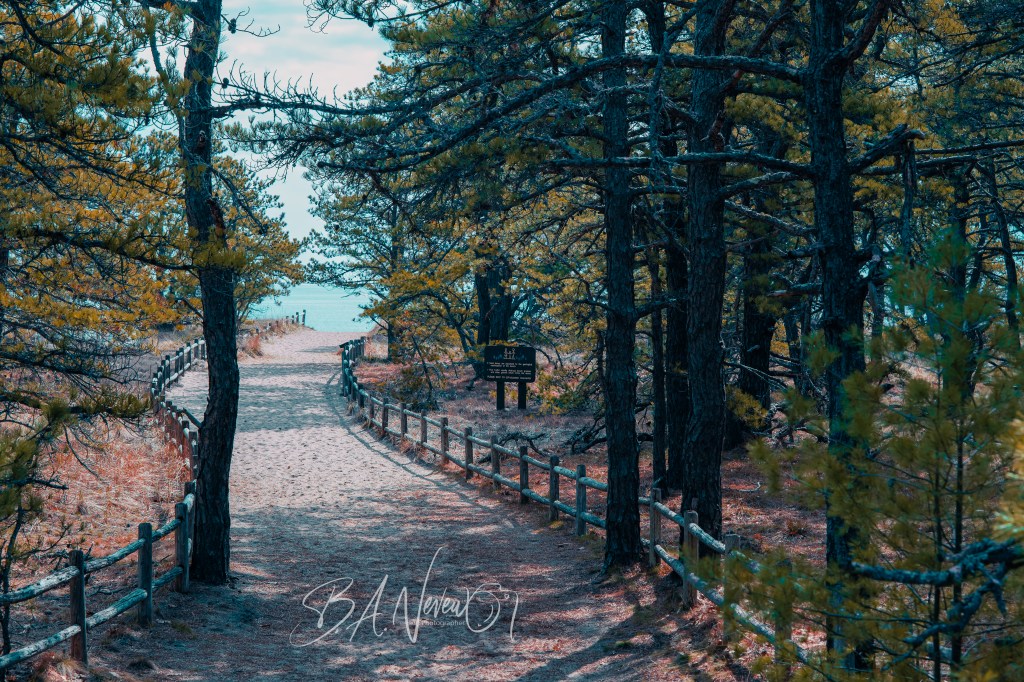
  • What makes Ferry Beach distinct isn’t just its history—it’s how little it feels to have changed over time.  The pathway through the dunes still channels people toward the sea much like it did generations ago.  When I was a kid our family and countless others would sometimes park along Route 9 and kids would scramble out of family sedans or beach wagons and scurry up this path to the beach and open water. 

    This oceanside state park is one of those Maine places where the past hasn’t disappeared. It’s been allowed to keep breathing but that might not have been possible without the creation of the park in the 1960’s.  As coastal Maine grew in popularity after World War II, development pressure increased. Like many shoreline areas, Ferry Beach faced the risk of being carved up for private ownership or commercial expansion.

    By the 1960s, local concern shifted toward preservation—recognizing the ecological value of the dunes, wetlands, and rare plant life.  Today, thanks to all who fought to preserve this space 60 years ago, the park protects 117 native acres between Bay View road and Saco Bay and a rare black gum swamp (Tupelo) on the northern fringe of the species’ range.  Black gum swamps range from southern Maine to the Gulf of Mexico and Tupelo is the Cree language name for swamp. 

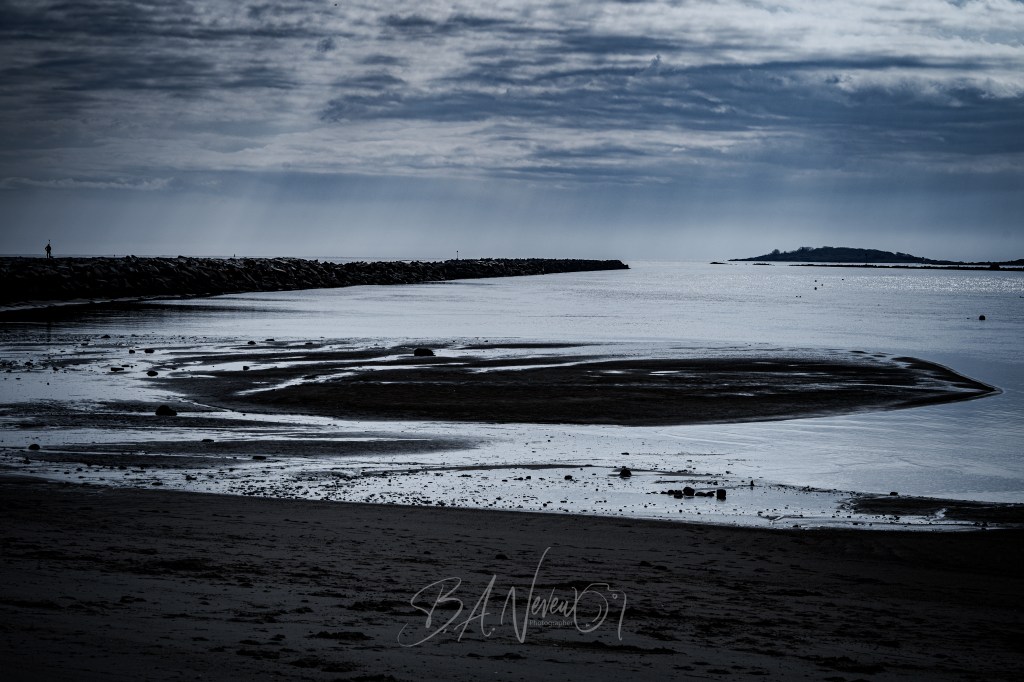
  • I stepped onto the sand at low tide and the first thing that struck me was the stillness. Not silence—just the quiet rhythm of the ocean pulling away. The tide was on its way out, slow and deliberate, leaving behind dark, rippled sand that looked almost alive beneath the dim light.

    The sky hung low and heavy, layered in gray, but not without a break. The sun found its way through in narrow shafts, cutting clean lines across the water. Where that light touched, the channel shimmered—just enough to catch your eye if you were patient.

    This is the moment I come for. The in-between. When the ocean isn’t crashing or calm, just moving with purpose.

    The jetty stretched out to the left, unchanged as always. Near the end stood a single figure, a surveyor I think, still against the horizon. No movement. Just watching. From where I stood, that person became part of the landscape—a marker of scale against something far bigger than both of us.

    The exposed channel widened as the water slipped farther away. Pools formed and drained without a sound. Everything felt stripped down, honest. No distractions. Just light, texture, and time doing its work.

    I stayed longer than I meant to.

    Because you know the tide will return. It always does. But out here, in this quiet retreat that I’ve photographed a hundred times if I’ve captured it once, you get a glimpse of what the ocean leaves behind—and that’s where the story lives.

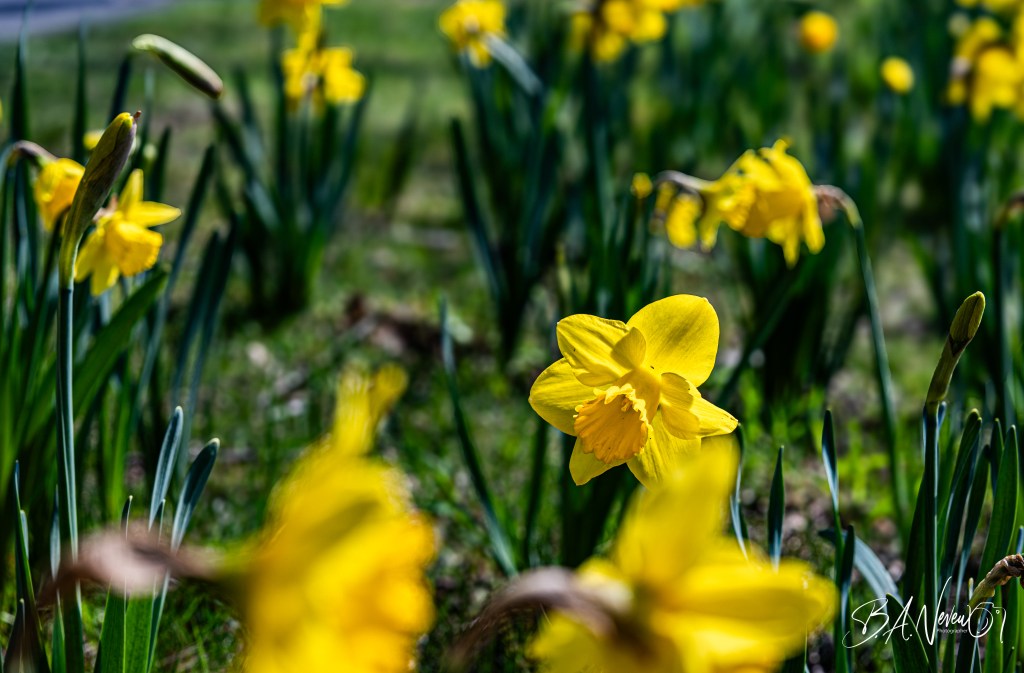
  • The light comes low and clean on this cool, although some would call it cold, spring morning in  Maine.  Morning sun slips between the stones and catching on the yellow faces of the daffodils. They stand where winter left them, thin and certain, their color too bright for the memory of snow. A breeze from the river below moves through and they bow, not in weakness, but in rhythm with the earth waking beneath them.

    One flower holds steady in the foreground, its trumpet open and unashamed, while the others drift in and out of focus like half-remembered thoughts of last winter.  There is no crowd here, only quiet company—grass, stems, and the soft blur of more yellow beyond. Life does not arrive all at once. It comes like this. One bloom, then another.

    You can almost hear it if you stand long enough—the faint rustle of new growth, the distant call of birds returning, the sound of winter finally loosening its grip.

    Spring does not announce itself. It simply persists.